
Civic Rights in A Digital Age (CRIDA) | September 12, 2025
Resetting the Rules: Humanis’ Key Reflections from DRAPAC25
Nisrina Nadhifah Rahman
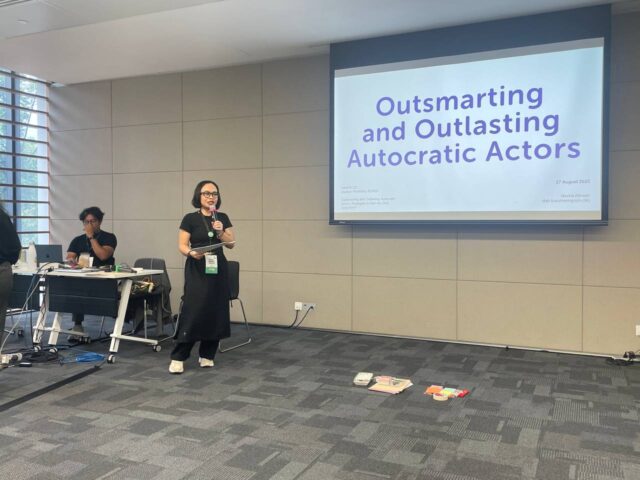
Image 1. Nisrina, the Project Manager of Connect Defend Act, hosted Humanis’ Session in DRAPAC
In today’s world, companies never seem to stop innovating, and governments never seem to stop regulating. Both move fast, leaving the rest of us barely catch our breath. Maybe, just maybe, the bravest thing to do is not to sprint competing them. Maybe, the real act of resistance is to pause, rethink, and reset the rules of the game.
Held on 26–27 August in Kuala Lumpur, the Digital Rights Asia-Pacific Assembly 2025 (DRAPAC25) brought together activists, journalists, and civil society leaders under the theme “Collective Digital Futures: Power, Resilience, and Imagination.” Co-hosted by Architects of Diversity (AOD Malaysia), Centre for Independent Journalism (CIJ Malaysia), INITIATE.MY, Sinar Project, and EngageMedia, the assembly explored three thematic tracks:
- Shaping power – driving change.
- Strengthening movements – securing our future.
- Beyond boundaries – beyond limits.
DRAPAC25 sparked urgent reflections on resilience, solidarity, and the digital futures we must reimagine together. Here are some of the insights I carried home:
Shared Struggles Across the Region
From the very first sessions, it became clear that despite different local contexts, we share strikingly similar realities in the Asia-Pacific.
Our common challenges include, but not limited to:
- Expanding digital authoritarianism and echoes of colonialism.
- State and corporate surveillance that stretches deeper every year.
- Internet shutdowns—always at moments when voices most need to be heard.
- Artificial intelligence creeping into daily life with little transparency or accountability.
Even so, as one speaker noted, in many ASEAN documents today, the words “human rights” starting to be disappeared.
Other pressing issues we -across the region- surfaced as well:
- The rising power of militaries, such as the Thailand–Cambodia conflict, and in Indonesia.
- Doxxing of activists, leaks of Personal Identifiable Information (PII) documents, and the manipulation of information.
- Cyclical patterns of repression that shift form but never fade.
- TikTok’s ban (and later unban) in various countries—raising questions about opaque deals between governments and platforms.
- Social media bills that risk criminalizing expression.
- Online gender-based violence, now amplified by AI and deepfakes, with women and gender minorities disproportionately targeted.
- Online harassment spilling offline, where police can show up at your door.
- State-funded “cyber troopers” paid to smear activists and turn public opinion against them.
Our conversations reminded us that the very platforms we depend on to organize resistance are also the breeding grounds for disinformation and harassment. The line between digital and physical space has now collapsed: streets have become algorithms, and public squares have turned into feeds and For You Pages (FYPs). In this blurred reality, repression takes many forms: living under outright authoritarian regimes is one kind of struggle, while living in democracies that quietly slide into autocracy is another. In both cases, the risks of digital and physical repression are now inseparably entangled.
There is “Strategic” in Strategic Litigation
One of the noteworthy sessions I joined was on Strategic Litigation, a subject that might sound intimidating with all its legal jargon, but that actually revealed a glance of hope for change.
Here’s what stood out:
- Each role matters. In strategic litigation efforts, not only lawyers and plaintiffs who are playing significant role. But also the rest of us and the supporters, together we can spot gaps and provide support where litigation could have the greatest impact, such as in campaign aspect.
- Old assumptions no longer hold. We all once assumed that the judiciary was relatively trustworthy. Yet we’ve seen that no major public interest cases have effectively challenged tech companies, and victims are often sidelined in legal processes. Thus, strategic litigation pushes them to the center.
- Silos hurt collaboration. In many parts of the world, lawyers, campaigners, and negotiators rarely work together. Day by day, we now see how significant is the role to convene and broker those missing connections.
- The price is high. Litigation against corporations is prohibitively expensive, and donor support is minimal. Building sustainability and connective tissues between actors is essential.
- Protection is crucial. Lawyers and activists need shields against Strategic Litigation Against Public Partnership (SLAPP) designed to intimidate and silence them. Here, the principle of “caring for those who care for us” comes vividly to life.
In the end, strategic litigation is less about excellent legal arguments and more about selecting impacted communities, accompanying them, and shaping public opinion. It is about narrative change as much as legal change.
Another powerful discussion was titled: “From Online Harassment to Pig Head Terror: Hybrid Repression in Shrinking Civic Spaces.”
In Indonesia, Tempo journalists have endured digital threats bleeding into online harassment in their offices and even at their homes. In Myanmar, the situation is even more precarious. Journalists operate underground—inside the country, at the borders, or in exile. One article and they risk their license revoked. Journalism there is not about working; it is about surviving. In Myanmar, social media remains one of the few tools to reach communities, but platforms rarely protect users. Even banking apps are surveilled by the state, making daily life a constant negotiation with risk.
Connect, Defend, Act: Expanding Civic Spacetime
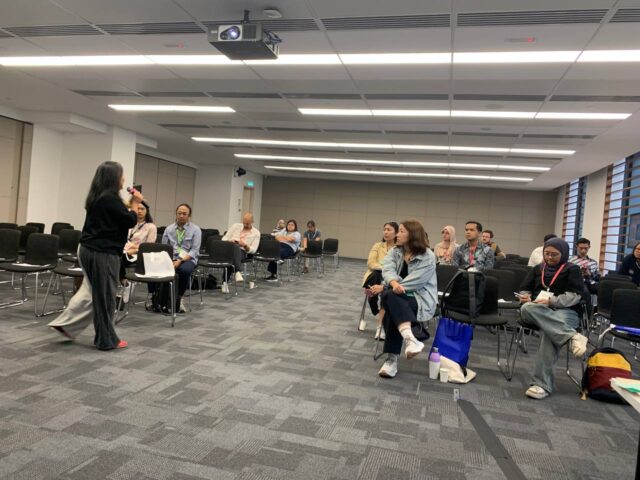
Image 2. Connect Defend Act Workshop in DRAPAC
On 27 August, Diah Kusumaningrum from the Institute of International Studies UGM (IIS UGM) and I, representing the Connect, Defend, Act! (CDA) project, hosted a workshop drawing on our baseline study in Indonesia. We identified three strategies civil society actors (CSAs) currently use to resist the shrinking of civic space:
- Connect: Build and strengthen networks and broker new ones.
- Defend: Create protection circles and practice collective care.
- Act: Organize collective actions to push civic space open again.
CDA pushes us to think about civic spacetime more expansively. It is not only about political freedoms—movement, dissent, vibrant public debate—but also about the conditions for dignified living: resisting militarization, de-patriarchalizing private spaces, standing in solidarity, and having the confidence to speak without fear.
Our workshop with 14 participants led by questions for two breakout groups “Connect” and “Act”:
- Connect group: Who are our frequent allies and opponents? Who are we forgetting? Which potential allies remain overlooked?
- Act group: Which points of intervention do we usually target? Which ones do we ignore, even though they might be strategic?
(for further context and reference, see our baseline study here)
The biggest lesson was that shrinking civic space looks different in each context, but the real question is: how shrinking is the shrinking civic spacetime and who is losing the most?
Blurring Boundaries, Building Futures
DRAPAC25 closes with the Open Tech Camp, where participants experimented with digital security tools and shared practices of resilience. The reminder was clear: vigilance must become habit. Every data breach is more than technical—it exploits human vulnerabilities.
Across the assembly, one theme echoed again and again: the boundaries had blurred. Online harassment bleeds into offline intimidation. Innovation intersects with exploitation. Democracies slide toward autocracy.
Amid these overlapping crises, DRAPAC25 also reminded us of possibilities. The same blurred spaces that enable repression can also fuel solidarity. For Humanis, the next step is to carry these lessons home—connecting local struggles with regional movements, defending civic space with care, and acting together to imagine a shared just and resillient future.